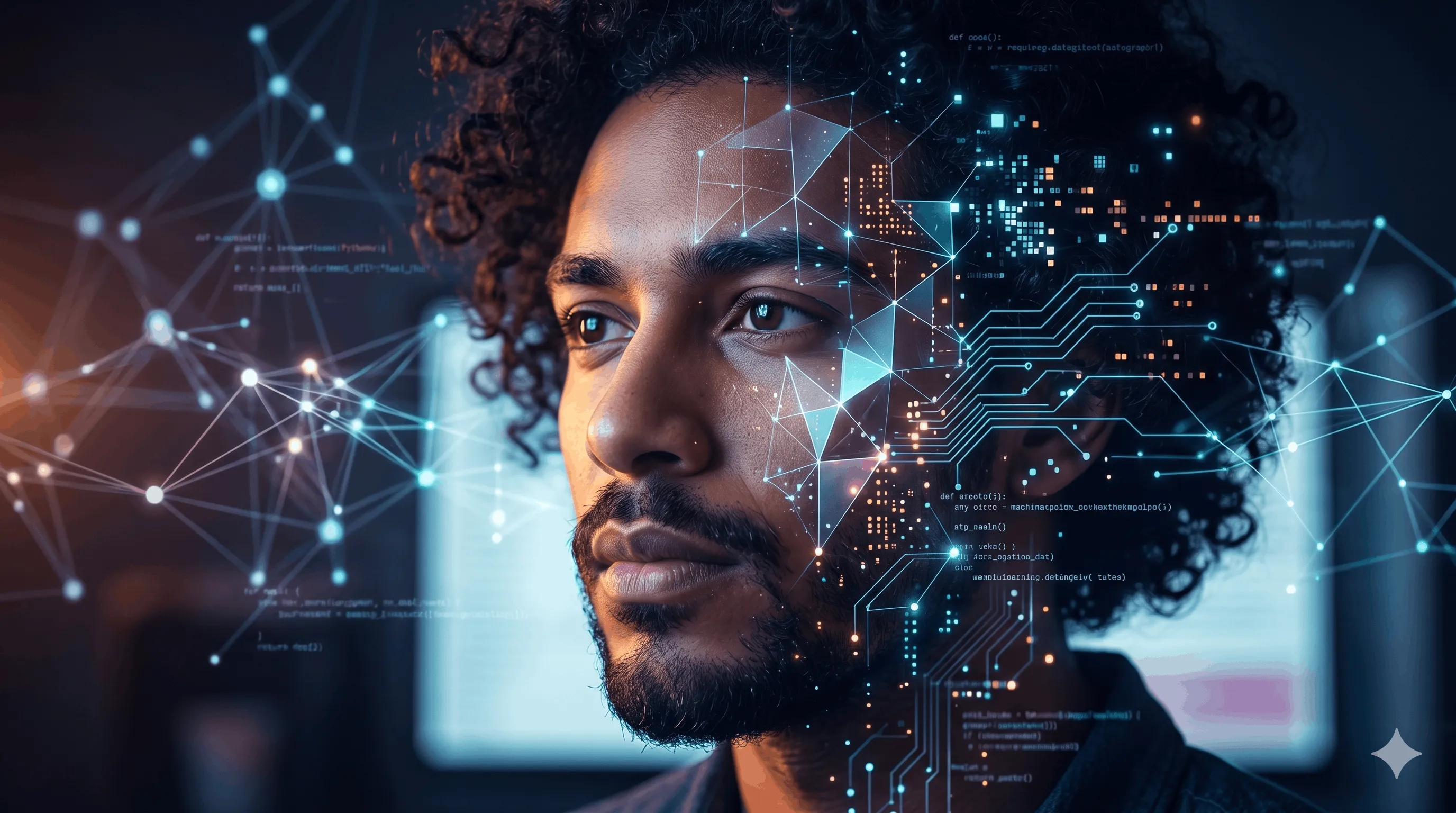
We all remember the week our social media feeds were suddenly flooded with stylized, hyper-realistic avatars of our friends. They were depicted as astronauts, fantasy warriors, and cyber-punk heroes. It was fun, novel, and undeniably fascinating. But beneath the surface of those magical digital portraits lies a profound technological shift: AI models are no longer just trained on the world; they are being trained on you.
The concept of fine-tuning an Artificial Intelligence model on a specific individual's face—using techniques like DreamBooth or LoRA (Low-Rank Adaptation)—has moved from niche developer forums to mainstream consumer apps. It only takes a dozen selfies for a neural network to map the exact topography of your features, your expressions, and your likeness.
But what actually happens when you trade your personal photos for a cool digital avatar? Let’s break down the reality, the allure, and the risks of personalized AI image models.
How AI Learns "You"
To understand the implications, it helps to understand the mechanism. Base models (like Stable Diffusion or Midjourney) are trained on billions of images to understand broad concepts: "dog," "sunset," or "human face."
When you upload your personal images to a custom avatar app, you are essentially providing a micro-education to a localized version of that AI.
The Process: The system pairs your photos with a unique identifier token (e.g., "photo of [YourName] person").
The Result: The model updates its internal "weights" (the mathematical connections that dictate how it generates images) to associate that token with your specific facial geometry, skin tone, and features.
The AI doesn't save your photos in a folder; it absorbs your likeness into its mathematical matrix. You become a coordinate in its latent space.
The Allure of the Algorithmic Mirror
There is a reason this technology exploded in popularity. The benefits are highly personalized and incredibly compelling:
Ultimate Creative Expression: You can place yourself in any historical era, art style, or fictional universe simply by typing a sentence.
Utility and E-Commerce: The potential for "digital try-ons" is massive. You could see exactly how a new hairstyle, a pair of glasses, or an outfit looks on your precise body type and face before making a purchase.
Digital Legacy: Some view personalized models as a way to preserve a high-fidelity interactive digital version of themselves or loved ones for the future.
The Shadow Side of Digital Cloning
While the technology is magical, it requires a significant level of trust—and candor dictates we acknowledge the very real risks involved in handing over your biometric data to third-party servers.
The Question of Consent and Deepfakes: If an AI model is trained on your face, whoever controls that model can generate images of you doing anything. In the wrong hands, this technology is the engine behind non-consensual deepfakes and digital impersonation.
Data Permanence: When you upload your selfies to a trendy app, what happens to the underlying model? Did you inadvertently grant the company a perpetual license to use your likeness to train future iterations of their commercial AI? (Always read the Terms of Service).
The Uncanny Valley of Self: On a psychological level, there is something deeply unsettling about seeing a machine generate "memories" of you that never happened. It blurs the line between personal identity and digital fabrication.
Taking Control of Your Pixels
If you decide to experiment with apps or services that train AI on your personal images, practice good digital hygiene:
Read the Fine Print: Look specifically for clauses about "data retention" and "training rights." Ensure the service explicitly states they delete your photos and the custom model after your generation session is complete.
Run It Locally: If you have the technical know-how and a powerful graphics card, you can train LoRA models on your own machine. This keeps your images entirely offline and out of corporate databases.
Be Selective: Never upload photos of children, friends, or family members to these services without their explicit, informed consent.
The era of personalized AI is here, and it is reshaping how we view our digital identities. As our faces become training data, the best defense is an informed user—one who understands the difference between a fun novelty and a permanent digital footprint.





Comments