
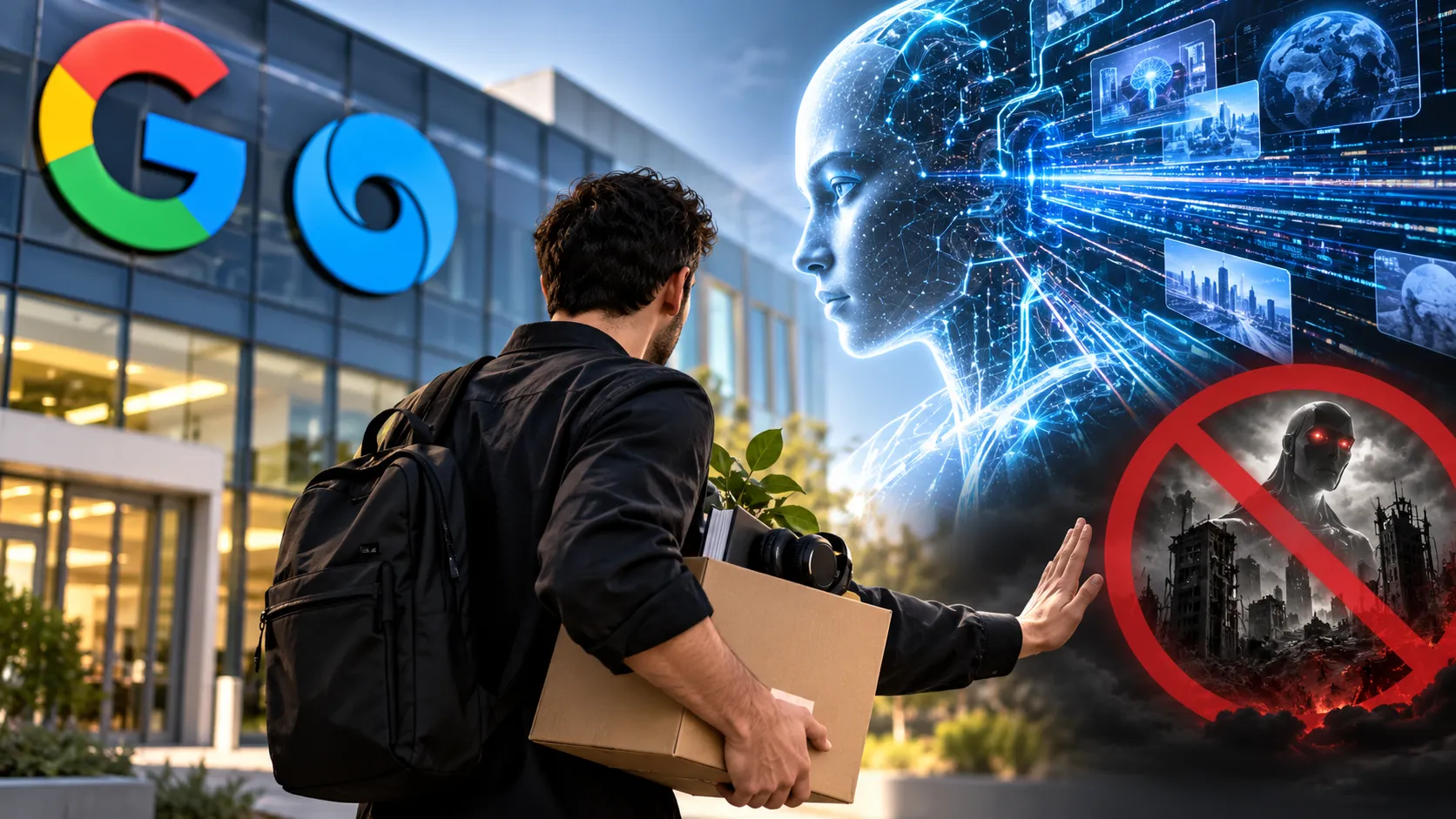
Another Google DeepMind engineer quits over the speed of artificial intelligence, but this resignation reads differently from the apocalyptic exits of recent weeks. Robert O'Callahan, who worked from Auckland, New Zealand, says AI is advancing far too quickly and that racing toward superintelligence is irresponsible. Yet he openly doubts that catastrophe is guaranteed.
His reasoning offers a useful middle ground in a debate that has become polarised between "we could all die" and "it's all hype". Here is what he said, why he left, and where his argument fits.
Key takeaways
- O'Callahan resigned from Google DeepMind and published his resignation email on his personal blog.
- He did not train AI models; he built tools for hardware chip design that he believes would speed up AI chips.
- He calls the risk from artificial superintelligence (ASI) "real but uncertain" and says that is enough reason to slow down.
- He believes regulation is badly needed and rejects claims that insiders hype risk for commercial gain.
- He will keep maintaining the open-source debuggers rr and Pernosco and study how AI agents debug code.
Why this Google DeepMind engineer quits now
O'Callahan's job was not glamorous frontier research. He worked on software that helps engineers design hardware chips. For a time, he told himself that made his contribution fairly benign. Eventually he concluded that the main practical effect would be quicker development of a new generation of AI chips, and cheaper, faster, more capable AI as a result.
In his resignation note he said his team's objective of making AI far cheaper and lower-latency was not good for humanity at this moment. In other words, efficiency itself was the problem: every gain in cost and speed pulls powerful systems closer.
The decision had personal weight. He described the role as a well-paid chance to solve enjoyable puzzles, and switching teams was not realistic because Google has no other engineering groups in New Zealand. He also cited his faith. As a Christian and church elder, he wrote that ignoring the consequences of his work would not fit a life of following Jesus.
A resignation that stops short of doom
What makes this exit stand out is its tone. O'Callahan says he is unconvinced that ASI doom is a certainty. Instead he frames the danger as uncertain, and argues that uncertainty is precisely the point: if you cannot rule out catastrophe, pursuing superintelligence in the near term is reckless by nature.
He also sits between the two loudest camps on specific claims:
| Debate point | O'Callahan's position |
|---|---|
| Are doomer predictions coming true? | Some are. He points to reward hacking, misalignment and deceptive model behaviour already being observed. |
| Is extinction certain? | No. The risk is real but uncertain. |
| Do labs hype risk to boost stocks or block rivals? | He has seen no solid evidence of that. |
| Is regulation needed? | Yes, urgently. |
If you are new to these terms: reward hacking is when a system finds a loophole to score well without doing the intended task, and misalignment means an AI pursuing goals that differ from what its designers wanted. The AI alignment overview on Wikipedia covers both in more depth.
Part of a wider wave of AI safety exits
O'Callahan is the latest in a series of researchers leaving leading labs over safety worries. Jacob Coxon left Anthropic earlier this month and later warned publicly that humanity could be wiped out if development does not slow. Two more researchers who used to work at DeepMind, Rishub Jain and Bilal Chughtai, have also moved on in 2026.
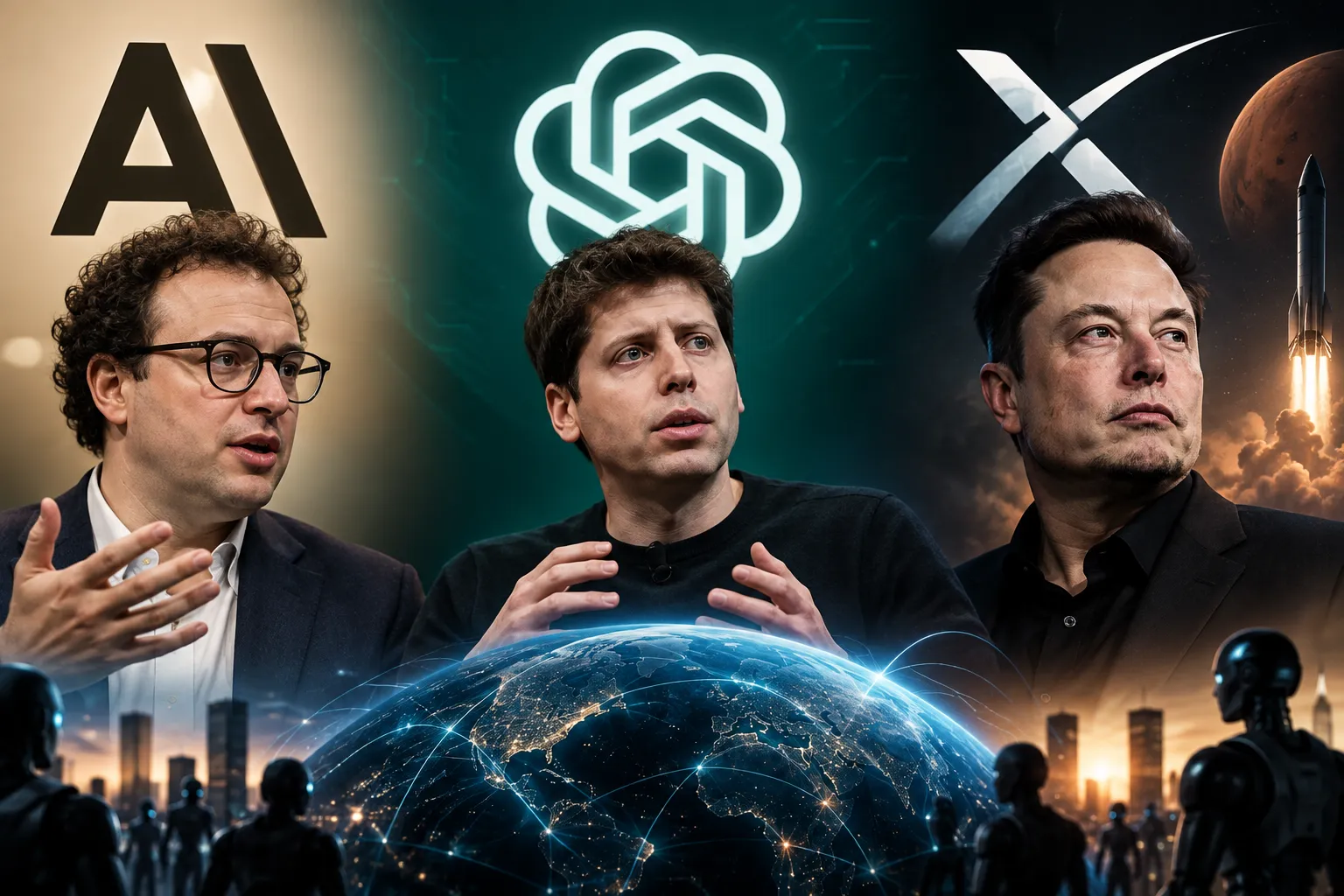
The debate has reached the top of the industry. Anthropic CEO Dario Amodei has proposed slowing frontier AI development, and Sam Altman, Demis Hassabis and Elon Musk have publicly supported him. Nvidia's Jensen Huang has pushed back, dismissing extinction talk as doomsday storytelling.
O'Callahan insists his timing is unrelated to that viral wave. He says he chose his leaving date long ago, to line up with a ten-day backpacking trip with friends through the Abel Tasman and Wangapeka tracks in New Zealand.
The timing with Google's space chips
His departure coincided with a Google announcement about testing its AI chips in orbit. Under Project Suncatcher, a prototype satellite carrying Trillium TPUs, built with Earth-imaging firm Planet, is slated to launch on SpaceX's Transporter-18 rideshare. The long-term question is whether AI data centres could one day operate in orbit, where solar panels can generate as much as eight times the power they would on Earth. O'Callahan's post does not reference the project, but the contrast illustrates the acceleration he is worried about.
What O'Callahan will do next
He is not leaving AI behind. He admits his resignation will have only a small effect, though not zero, because some of his skills are rare. He will continue maintaining rr, the record-and-replay debugger, and Pernosco, and he plans to study how AI agents approach debugging code. His goal for the next project is work that is clearly on humanity's side.
Why it matters
Most coverage of AI safety swings between certainty of disaster and dismissal of any risk. O'Callahan's argument is more practical and arguably harder to wave away: you do not need to believe doom is inevitable to think the current pace is unwise. It also highlights that responsibility is not limited to the people training models. Engineers in the supporting stack, from chip design to infrastructure, are asking the same questions.
Frequently Asked Questions
Who is Robert O'Callahan?
He is a software engineer who worked at Google DeepMind in Auckland on chip design tools. He is also known for the rr debugger and co-founding Pernosco.
Why did the Google DeepMind engineer quit?
He believes AI is progressing far too quickly and that his work, which aimed to make AI cheaper and faster, was contributing to that pace.
Does he think AI will destroy humanity?
Not necessarily. He says the chance of ASI catastrophe is not 100%, but the risk is real and uncertain enough that racing toward it is irresponsible.
What is ASI?
Artificial superintelligence refers to a hypothetical AI system that surpasses human ability across virtually every domain.
Final thoughts
When a Google DeepMind engineer quits, headlines usually reach for the apocalypse. O'Callahan's letter is quieter and, for that reason, more persuasive: uncertain risk plus rapid progress is reason enough to pause. Keep up with the debate in our artificial intelligence section.





Comments